AI & Law
Why Law Is Still Catching Up on Workflow Technology

Modern litigation has embraced digital tools, but not digital workflows. Here's why law is still catching up on workflow technology and what that means for the future of legal practice.
Every litigation lawyer has a system.
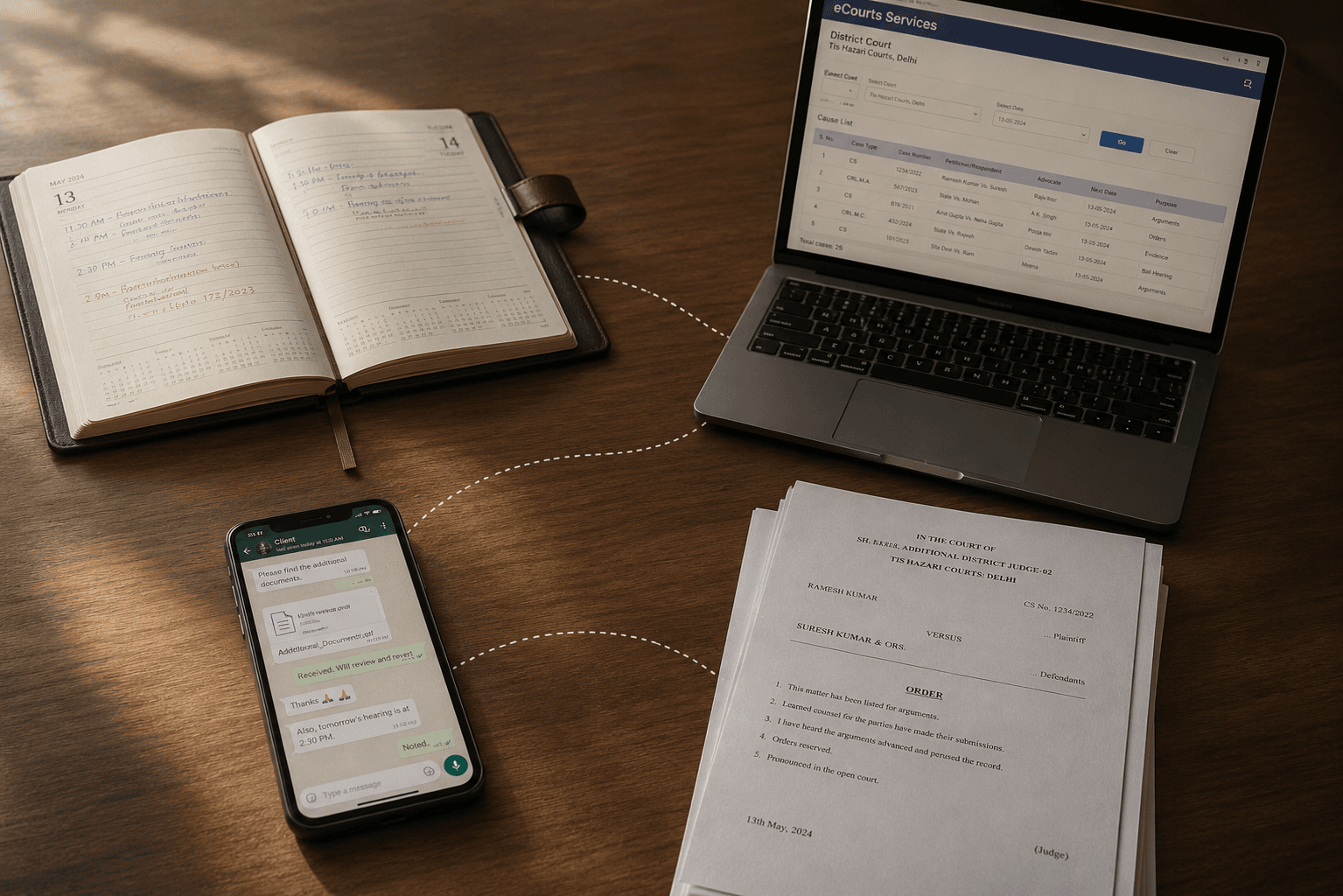
A diary with hearing dates. An Excel sheet tracking matters. Multiple WhatsApp groups for clients and colleagues. Folders full of PDFs. Calendar reminders. Sticky notes on a desk. Perhaps even a trusted clerk who remembers details no software ever could.
None of these systems is taught in law school. They evolve, shaped by experience, habit, and the unique demands of each practice.
Ask five litigation lawyers how they manage their work, and you'll likely hear five different answers.
Unlike many other professions, litigation has never had a single, standardised workflow. Every lawyer builds a process that works for them. For years, that approach has served the profession well. But as practices grow, courts become more digital, and clients expect faster communication, these individually built systems are beginning to show their limits.

Law Doesn't Have a Technology Problem
The legal profession hasn't resisted technology. Today, lawyers routinely use eCourts, legal research platforms, digital filings, video conferencing, email, and instant messaging. Litigation is undoubtedly more digital than it was a decade ago.
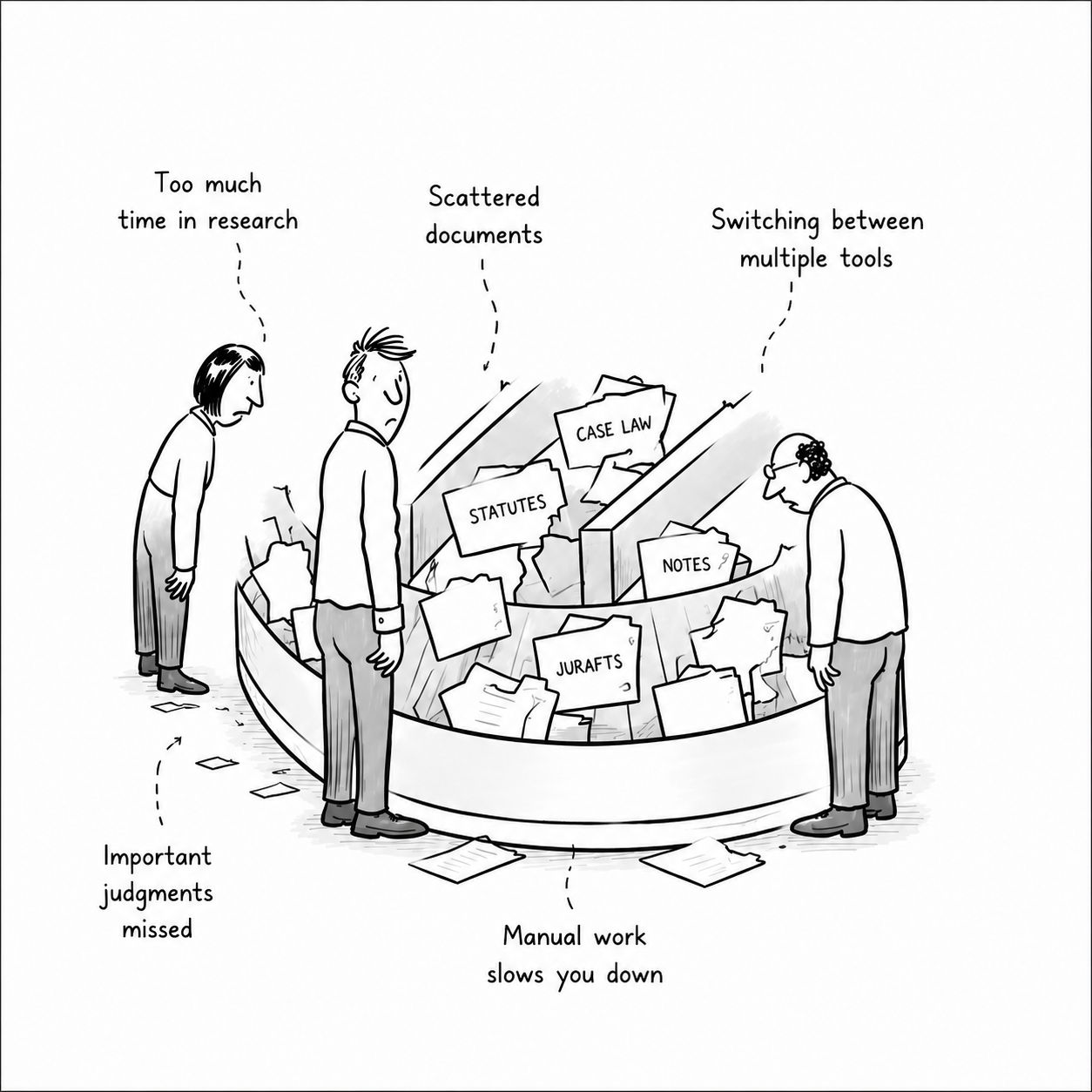
Yet technology alone hasn't made legal practice simpler. The reason is that most of these tools were designed to solve individual problems, not to work together as a connected workflow.
Hearing dates come from court portals. Orders are downloaded elsewhere. Clients send documents over WhatsApp. Research is done in legal databases, while reminders are kept in personal calendars. Each tool performs its role well, but the real effort lies in connecting them all.
Why Litigation Is Different
Unlike banking, logistics, or manufacturing, litigation doesn't follow a predictable sequence of events.
A hearing may be adjourned without much notice. A bench may change. An order may be uploaded later than expected. Fresh applications can alter the direction of a case, and client priorities can shift overnight.
The work itself is dynamic. That makes designing efficient legal workflows far more challenging than in industries where processes remain largely consistent.
This is why litigation practices still depend heavily on manual coordination. Lawyers, juniors, clerks, and support staff constantly exchange information to stay aligned - a system built on trust and experience, but one that demands considerable time and effort.

The Cost of Outgrowing Manual Systems
Growth brings more clients, more hearings, more documents, and more communication. The legal work certainly increases, but so does the administrative effort required to keep everything organised.
The usual response is simple: another spreadsheet, another reminder, another WhatsApp group. Each solves an immediate problem, but together they create a workflow that's increasingly difficult to manage.
The challenge is no longer finding information. It's managing it.
The Next Chapter of Legal Technology
For years, conversations around legal technology have focused on artificial intelligence and whether software will replace lawyers. Perhaps the more important question is simpler.
How can technology help lawyers spend less time coordinating work and more time practising law?
Its role is simple: keep information organised, make deadlines visible, and ensure the right updates reach the right people without constant follow-ups.
The future of legal practice won't be defined by how much technology lawyers use. It will be defined by how seamlessly that technology supports the way they already work. Because good workflow technology shouldn't change the practice of law, it should simply make the practice of law easier to manage.

 Get Started Free